
Description
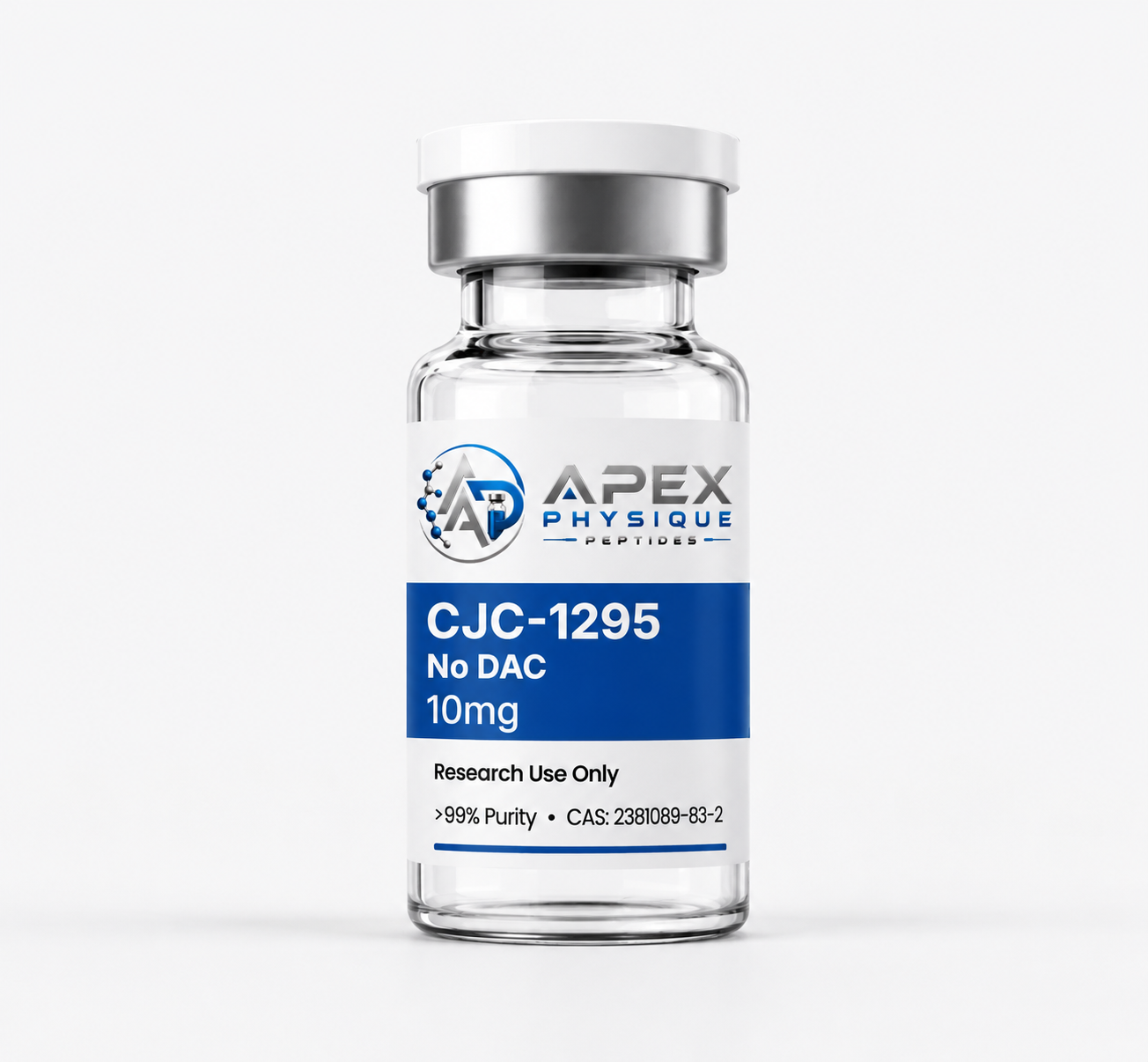
CJC-1295 No DAC (Modified GRF 1-29, CAS 863288-34-0) is a research-grade synthetic analog of growth hormone-releasing hormone (GHRH), manufactured in the USA with ≥99% purity verified by third-party HPLC and mass spectrometry. Scientists investigating GH secretion dynamics, pituitary somatotroph signaling, and metabolic regulation rely on this peptide for its pulsatile, physiologically accurate GH stimulation profile.
Every vial ships with a batch-specific Certificate of Analysis confirming identity and purity.
What Is CJC-1295 No DAC?
CJC-1295 No DAC — also referred to as Modified GRF (1-29) or Mod GRF 1-29 — is a synthetic 29-amino-acid peptide derived from the biologically active N-terminal fragment of endogenous growth hormone-releasing hormone.
Four key amino acid substitutions (D-Ala at position 2, Ala at position 8, Glu at position 15, and Norleucine at position 27) confer resistance to enzymatic degradation, primarily by dipeptidyl peptidase IV (DPP-IV).
The “No DAC” designation distinguishes this peptide from its Drug Affinity Complex-conjugated counterpart, indicating the absence of an albumin-binding linker molecule.
This structural difference produces a biological half-life of approximately 30 minutes and GH release that closely mirrors the natural pulsatile secretion patterns of endogenous GHRH — rather than the prolonged, blunted GH elevation produced by the long-acting DAC-conjugated form.
This peptide is most frequently studied alongside Ipamorelin in what researchers call the CJC/Ipa stack — one of the most cited GH peptide combinations in the literature. For context on how it fits into the broader growth hormone research landscape, see the CJC-1295 Ipamorelin research guide and the complete peptide research overview.
Key Research Applications
- Growth Hormone Secretion Dynamics: CJC-1295 No DAC produces short-duration pulsatile GH release from anterior pituitary somatotrophs, making it a valuable model compound for physiologically accurate GH secretion studies.
- GHRH Receptor Pharmacology: Researchers use this compound to characterize GHRHR agonism, cAMP signaling cascades, and downstream CREB phosphorylation events in pituitary and hypothalamic cell models.
- Combination Stack Research: Mod GRF 1-29 is frequently combined with Ipamorelin (a selective GHSR-1a agonist) in the widely studied CJC/Ipa stack, which demonstrates synergistic GH amplification through complementary receptor pathways.
- Somatopause and Aging Research: Studies examining age-related decline in GH secretion have used this peptide as a reference GHRH analog in elderly model systems and assays simulating the somatopause phenotype.
- Body Composition and Metabolic Studies: Animal model research exploring pulsatile GHRH agonism has investigated downstream effects on lipolysis, protein anabolism, hepatic IGF-1 expression, and responses to caloric restriction. For related metabolic research context, see the best peptides for weight loss research guide.
Product Specifications
| Peptide | CJC-1295 No DAC (Modified GRF 1-29) |
| CAS Number | 863288-34-0 |
| Molecular Formula | C₁₅₂H₂₅₂N₄₄O₄₂ |
| Molecular Weight | 3367.97 g/mol |
| Purity | ≥99% (HPLC & mass spectrometry verified) |
| Form | Lyophilized (freeze-dried) powder |
| Storage | Lyophilized: −20°C. Reconstituted: 2–8°C, use within 4 weeks. |
| Testing | Batch-specific COA included |
| Origin | US manufactured |











Reviews
There are no reviews yet.